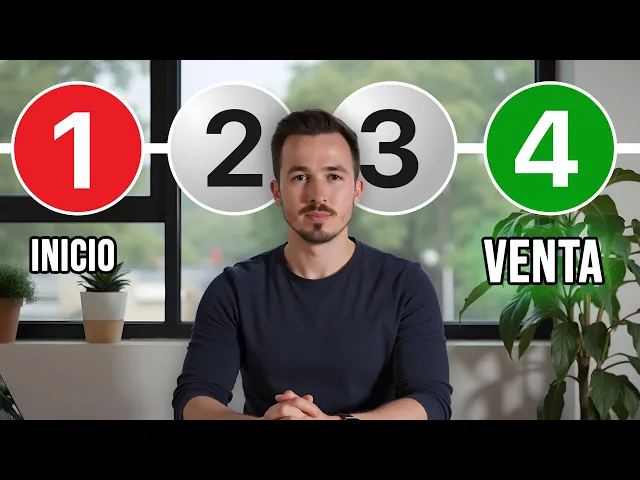
How does a sales funnel work?
How does a sales funnel work?
How does a sales funnel work?
Sales
Sales
10 minutes
10 minutes

How a B2B sales funnel works: stages, metrics, and common mistakes
The funnel filters and guides prospects through each stage, from the moment they discover you until they become loyal customers.
The TOFU, MOFU, and BOFU stages have different objectives: attract, consider, and decide; each requires different content and channels.
Defining the buyer persona before building the funnel is the most important step to ensure everything else works.
Automated lead nurturing maintains prospect interest and prepares them for the sales conversation at the right time.
Measuring CAC, LTV, and conversion rate by stage is what turns a funnel into a predictable growth system.
Let’s think of the term sales funnel, or conversion funnel, as the treasure map that guides a stranger until they become a customer. In essence, it is a visual representation of the journey a person takes from the first time they hear about your company until they finally pull out their card and buy.
This model is not just a nice drawing; it is a strategic roadmap that allows us to support potential customers at every step of the journey, adjusting our actions so the process is as smooth as possible and, of course, to increase sales.
Understanding the concept of a sales funnel
The kitchen funnel analogy is perfect for understanding it. At the top, the opening is wide and a lot of liquid flows in. But as it goes down, the path narrows, and in the end only a concentrated stream comes out. The sales funnel operates on the same logic.
At the widest part (what we call TOFU, or Top of the Funnel), you cast a wide net to attract a very broad audience, people who could be interested in what you do. As they move through the different stages, you filter and nurture the ones who truly have potential, while others naturally drop off along the way because they are not your ideal customer. By the end of the journey, only the most prepared and convinced prospects remain, and they are the ones who become customers.
Why is it a fundamental tool?
Trying to sell without a funnel is like navigating without a compass: chaos. You have no idea why some prospects disappear, and you do not know where you should be investing your time and money.
Implementing a funnel gives you a clear and, above all, measurable structure. It turns uncertainty into a system you can analyze and improve. It helps you understand things like:
Customer behavior: What interests them? What content do they read? What actions do they take at each moment?
Friction points: At what exact point do they abandon the process? What is failing there?
The effectiveness of your actions: Which channels bring you the best leads? Which messages really work to move them toward purchase?
A well-defined funnel is not simply a marketing tactic; it is the engine that drives a predictable sales process. It gets marketing and sales teams rowing in the same direction, ensuring that every email, every call, and every ad has a clear purpose.
Patience and follow-up are crucial in this game. In fact, it is estimated that more than 70% of sales close after five or more contacts. That makes it clear that we need a system to avoid losing track, and that is exactly what a good funnel provides. If you want to see more data, you can take a look at this analysis from The Funnel Box.
This methodology is pure gold in the B2B world, where sales cycles tend to be much longer and more complex. To better understand how this piece fits into the bigger picture, you can explore our guides on digital marketing strategies.
Breaking down the stages of the sales funnel
To truly understand what a sales funnel is, it is best to imagine it as a journey we design for our future customers. This journey has four key stops, each with its own purpose. It is not about pushing for the sale, but about guiding, providing the right value at the right time.
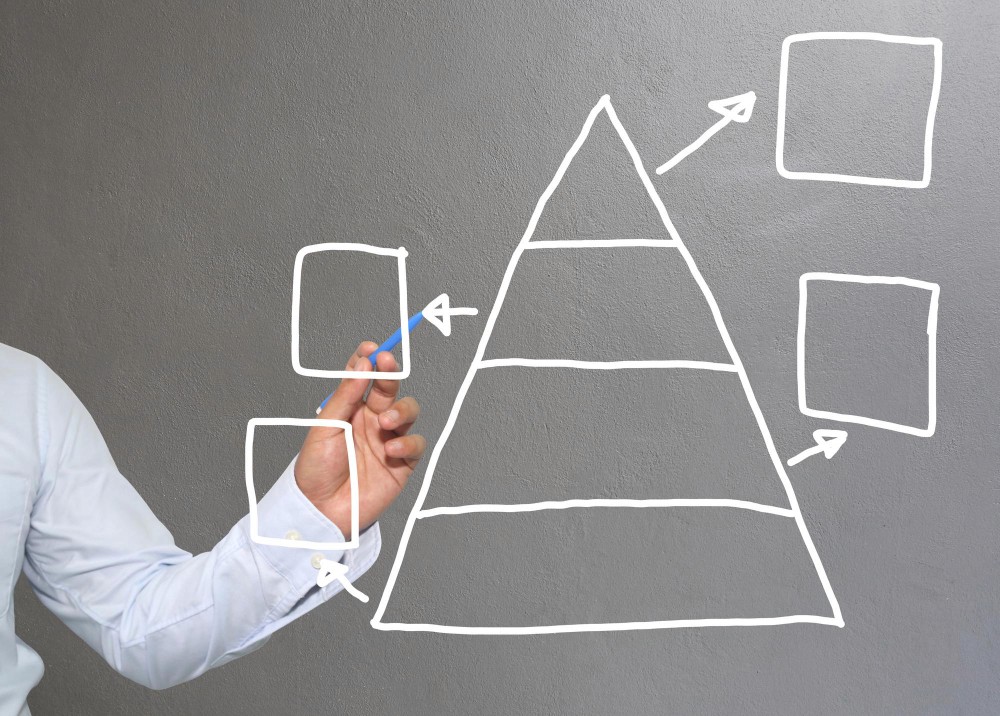
Stage 1: Attraction (TOFU - Top of the Funnel)
This is the mouth of the funnel, the entry point. Here your mission is not to sell, but to capture the attention of a very broad audience. These are people who do not know you yet, but who have a problem or a need that, by chance, you can solve.
Content at this stage should be purely educational and general. Think of blog articles that answer frequently asked questions, infographics that get shared on their own, or short, direct videos for social media. The goal is simple: to be seen as a reference in your industry and spark their curiosity so they want to learn more.
Stage 2: Consideration (MOFU - Middle of the Funnel)
Good. You have captured their interest, and those anonymous visitors are now leads. They are now in the consideration stage, a point where they begin actively evaluating the different solutions to their problem. And your company, of course, is one of the candidates.
At this point, it is time to go deeper. The content needs to be more specific and detailed. It is the perfect moment to offer webinars, comparison guides, case studies, or downloadable ebooks. You are helping your prospect better understand their own problem and see how your solution fits against others.
This is about building trust and proving that you know what you are talking about. That is why it is vital to have a strong customer acquisition system, because this is where you separate the merely curious from those with real interest.
Stage 3: Decision (BOFU - Bottom of the Funnel)
The prospect has already done their homework, compared options, and is one step away from making a decision. At this stage, the bottom of the funnel, your only goal is to convince them that your solution is, without question, the best option on the table.
Content here should be direct and focused on your product or service. Personalized demos, free trials, customer testimonials, and clear pricing tables are your best allies. It is about removing the final barriers and objections that are holding back the purchase.
At this final stage, personalization is everything. Your prospect no longer wants generic information; they need to know exactly how your offer will solve their problem and what results they can expect.
Stage 4: Action and retention
The sale is not the end of the journey. In fact, it is the beginning of a relationship you want to last a very long time. The action stage focuses on making the close as easy as possible, but retention starts immediately afterward.
The goal now is to turn that new customer into a repeat customer and, if you do it very well, into a brand advocate. To achieve that, focus on:
An excellent onboarding: Make sure they understand how to use your product or service to get the full benefit from it.
Proactive support: Anticipate their questions and offer help before they have to ask for it.
Consistent communication: Stay in touch with valuable newsletters, exclusive offers, or loyalty programs.
Companies that take the time to map this journey see improvements of up to 15% in their conversion rates, simply because they know exactly where to focus at each moment.
Content strategies for each stage of the funnel
To make all of this clearer, we have created a table that summarizes what type of content and which channels work best at each stage of the funnel.
Funnel Stage | Main Objective | Content Types | Recommended Channels |
|---|---|---|---|
Attraction (TOFU) | Build awareness and drive traffic | Blog posts, infographics, short videos, basic guides | SEO, Social Media, Display Advertising |
Consideration (MOFU) | Capture leads and educate on solutions | Ebooks, webinars, case studies, comparison guides | Email marketing, lead magnets on the website, retargeting |
Decision (BOFU) | Close the sale and demonstrate value | Product demos, free trials, testimonials, pricing tables | Personalized email, sales calls, specific use cases |
Retention | Retain the customer and encourage referrals | Advanced tutorials, exclusive newsletters, loyalty programs | Customer support, online community, post-sale email |
This table is a fantastic roadmap for aligning your marketing and sales efforts, ensuring that you are delivering the right message to the right person at the right time.
How to build your first B2B sales funnel
All right, now we have the theory clear. But how do we go from a diagram on a whiteboard to a system that actually attracts customers? Building your first B2B sales funnel may seem like a mountain, but if we break it down into smaller, logical steps, you will see it is completely manageable. The trick is not to overcomplicate things, but to be very precise at every stage.
It all starts with a simple truth: it is impossible to sell to someone if you do not understand what keeps them up at night. That is why the first step, and I would say the most important of all, is to define your ideal customer with absolute precision.
Define your buyer persona and their journey
Before writing a single line of an ad or creating any content, you need a crystal-clear mental picture of who you are talking to. In B2B, this goes far beyond age or location. You need to put yourself in your buyer persona's shoes and understand their professional challenges, their goals, and above all, their pain points.
Ask yourself these questions:
What role do they hold, and what are their day-to-day headaches? A CEO thinks about the company’s overall ROI, while an IT manager is concerned with security and integration with the systems they already have.
What problems are they facing that your solution could solve? If you understand their frustrations, you can position your product not as just another feature, but as a real relief.
Where do they look for answers when they have a problem? This will tell you whether your customer is on LinkedIn, reading technical blogs, or participating in industry forums.
Who else has a say in the buying decision? In B2B, you are almost never selling to just one person. It is essential that you identify the full buying committee so you do not leave anyone important out of the equation.
Once you have this profile, the next step is to map their buying journey (customer journey). Try to put yourself in their position and visualize the entire process: from the moment they realize they have a need until they choose a solution. This is key so that each part of your funnel fits what they need at every moment.
A B2B sales funnel that works is not designed for your company; it is designed for your customer. Each step must answer their questions, ease their fears, and naturally guide them toward the solution you offer.
Create a lead magnet they cannot refuse
Now that you have your buyer persona in mind, you need a reason for them to give you their contact details. This is where the lead magnet comes in: high-value content that you offer in exchange for their email. And forget generic discounts; in B2B, value translates into knowledge and practical solutions.
Some examples of lead magnets that work extremely well in B2B:
Technical reports or whitepapers that analyze a complex industry problem in depth.
ROI calculators that let them estimate how much money they could save or make with your solution. It is a tangible way to show value.
Webinars or online seminars with experts who provide useful training that can be applied to their work.
Detailed case studies that demonstrate with numbers and facts the results you have achieved for other customers like them.
The goal is simple: you need to offer something so useful that their first thought is, "I absolutely need this."
Choose the right channels and start nurturing
Perfect. You know who you are targeting, and you have the perfect hook to attract them. Now the question is: where do you place it so they see it? Channel selection is critical. In the B2B world, some channels almost always hit the mark: LinkedIn Ads to segment by role and company, technical SEO focused on business keywords, and of course, email marketing directed to segmented databases.
But be careful: once someone downloads your lead magnet, the work has only just begun. Now it is time to put a lead nurturing system in place, which usually relies on a sequence of automated emails. This sequence is not meant to bombard them with offers. Its mission is to educate, build trust, and keep your brand top of mind, always adding value in every communication.
As you can see, this entire process requires very careful planning. If you feel you could use expert guidance to bring all the pieces together, a good option is to explore our B2B sales consulting services, where a structured method can make a real difference. The final goal is for every lead that reaches your sales team to arrive informed, qualified, and ready for a value-driven conversation.
Measuring what really matters in your funnel
A sales funnel without data is like navigating without a compass: pure intuition. To turn it into a real revenue-generating machine, you have to measure it. And no, this is not about collecting charts and tables, but about focusing on the indicators (KPIs) that truly impact the business.
You need to move away from vanity metrics, like likes or website visits, which are fine but do not pay the bills. The key is to focus on the numbers that have a direct relationship with your revenue and help you understand the health of your funnel at each stage.
The KPIs you cannot ignore
To get a full diagnostic of your funnel, there are four fundamental metrics that will give you a 360-degree view, from the first contact with a stranger to long-term profitability. Think of them as the dashboard of your sales strategy.
These are the essential indicators:
Conversion rate by stage: This is the pulse of your funnel. It tells you what percentage of people move from one stage to the next (from visitor to lead, from lead to opportunity, etc.). If you detect a sharp drop at a specific stage, you have just found a bottleneck that needs to be fixed.
Customer Acquisition Cost (CAC): Put simply: how many dollars does it cost you to acquire a new customer? To calculate it, add up all marketing and sales investment (ads, salaries, tools) and divide it by the customers you closed in that period. A sky-high CAC is a warning sign that your model is not sustainable.
Customer Lifetime Value (LTV): This metric is a projection of all the money you expect a customer to spend with your company while they remain a customer. A high LTV is synonymous with loyal, satisfied customers who repeat and trust you.
Sales cycle velocity: Measures the average time from when a lead raises their hand to when they sign the contract. In B2B, sales cycles can be extremely long, so any small improvement in reducing this time has a tremendous impact on cash flow and team efficiency.
The real goal is not to look at these metrics in isolation, but to understand how they relate to each other. The golden rule is that your LTV should be at least three times your CAC. If you do not reach that ratio, it means you are spending too much on acquiring customers that are not profitable for you.
From data to concrete actions
The real magic begins when you use this information to make decisions.
Do you see that the conversion rate between the consideration and decision stages is very low? It may be time to refine your product demos or show more case studies so prospects trust you.
Has your CAC spiked? Then it is time to review which marketing channels are consuming budget without delivering results and move that spend to the ones that bring you quality customers at a manageable cost.
In short, measuring your sales funnel lets you stop relying on intuition and start operating with certainty, optimizing every dollar invested and building solid, predictable growth.
Key tools to automate and optimize your funnel

Let’s be honest: trying to manage every stage of the sales funnel manually is madness. In the B2B world, where every detail in personalization and follow-up matters, technology has stopped being a luxury and become an absolute necessity if you want to scale results predictably.
Fortunately, today we have an arsenal of tools designed to take repetitive tasks off your plate and give you a panoramic view of the entire process. This frees your teams to focus on what truly adds value: building strong relationships and closing deals.
The CRM, your command center
If your sales funnel were a body, the CRM (Customer Relationship Management) would undoubtedly be the brain. It is the platform that centralizes and gives meaning to every interaction you have with your prospects and customers. A good CRM is the cornerstone of the entire operation.
With a powerful CRM system, you can:
Keep all information in one place: No more scattered spreadsheets. Every email, call, meeting, and contact detail is stored in a single, accessible profile.
Segment with precision: It allows you to group contacts by behavior, industry, or which stage of the funnel they are in so you can send messages that truly resonate with them.
Visualize your sales pipeline: It gives you a clear picture of all the opportunities on the table, helping you forecast revenue and identify the bottlenecks where deals get stuck.
Platforms like HubSpot or Salesforce are industry leaders for a good reason: they get marketing and sales working side by side, with the same information and in real time.
A CRM is not just a digital filing cabinet. It is an intelligence tool that helps you understand what drives your customers and make strategic decisions based on data, not intuition.
Automation to nurture at scale
Generating leads is only the beginning of the journey. The real challenge, and where many teams stall, is maintaining their interest and guiding them carefully through the consideration and decision stages. This is where marketing automation platforms become your best allies.
Tools like ActiveCampaign or Pardot (now Marketing Cloud Account Engagement) are experts in the art of large-scale lead nurturing. They let you create automated email flows that trigger based on what the user does: if they download an ebook, if they visit your pricing page, and so on.
That way, you ensure each lead receives the right content at the right time, educating them about your solution and getting them ready for a conversation with a salesperson. At the same time, tools for creating landing pages like Unbounce or Leadpages help you design lead capture pages that truly convert, maximizing the number of visitors who turn into quality leads.
Frequently asked questions about the sales funnel
Even with a well-designed map, it is normal to have questions when you start building or refining your sales funnel. Let’s clear up some of the most common doubts so you can move forward with complete confidence.
Is the sales funnel the same as the marketing funnel?
This is a very common question. Although they work hand in hand and need each other, they are not the same. Think of them as two stages of the same journey.
The marketing funnel handles the top of the funnel (TOFU and MOFU). Its mission is to capture the attention of strangers, attract them with valuable content, and turn them into leads who already show interest.
Right there, where marketing ends, the sales funnel begins. It focuses on the final part of the journey (BOFU), taking those already informed leads and guiding them to close. In short: marketing sets up the match, and sales scores the goal. That is why coordination between both has to be perfect.
How long will it take to see results with my funnel?
This is the million-dollar question, and the honest answer is that there is no exact timeframe. It depends on several key factors that are unique to each business.
The complexity of your sales cycle: In B2B, a sales process can take months. Naturally, seeing solid results will take longer than in a B2C impulse-buy model.
The starting point of your strategy: If you are starting from scratch, you first need to generate traffic, begin capturing leads, and adjust conversion rates. All of that takes time.
The quality of the implementation: A well-defined funnel, with the right messages and the right tools, will always move faster.
Realistically, you could see your first qualified leads in a few weeks, but building a steady and predictable sales flow usually takes 3 to 6 months to consolidate.
Does this funnel model work for any company?
Absolutely. Although here we have focused on B2B, the strength of the sales funnel lies in its flexibility. An e-commerce business will have a shorter, more automated funnel. A consulting firm will have a longer one, based on building trust through meetings and demos. Even a local bakery can use it to bring people into the store!
The key is not the industry you work in, but how well you know your customer. If you understand how they make buying decisions, you can design a funnel that works for you.
What mistakes should I avoid at the start?
To wrap up, here are three of the most common missteps so you can avoid them:
Not defining your buyer persona: This is the original sin. If you do not know exactly who you are speaking to, everything you build on top of that will be unstable.
Asking for the sale too soon: Trying to close a deal on the first contact is like proposing on the first date. First you need to earn trust and demonstrate value.
Forgetting to measure results: Not analyzing metrics is like driving blindfolded. Data tells you what is working, what is not, and where you need to step in to improve.
At SalesDose, we design and implement B2B sales funnels that turn your growth into a predictable and scalable process. Discover how we can help you build your sales machine here.
Let’s think of the term sales funnel, or conversion funnel, as the treasure map that guides a stranger until they become a customer. In essence, it is a visual representation of the journey a person takes from the first time they hear about your company until they finally pull out their card and buy.
This model is not just a nice drawing; it is a strategic roadmap that allows us to support potential customers at every step of the journey, adjusting our actions so the process is as smooth as possible and, of course, to increase sales.
Understanding the concept of a sales funnel
The kitchen funnel analogy is perfect for understanding it. At the top, the opening is wide and a lot of liquid flows in. But as it goes down, the path narrows, and in the end only a concentrated stream comes out. The sales funnel operates on the same logic.
At the widest part (what we call TOFU, or Top of the Funnel), you cast a wide net to attract a very broad audience, people who could be interested in what you do. As they move through the different stages, you filter and nurture the ones who truly have potential, while others naturally drop off along the way because they are not your ideal customer. By the end of the journey, only the most prepared and convinced prospects remain, and they are the ones who become customers.
Why is it a fundamental tool?
Trying to sell without a funnel is like navigating without a compass: chaos. You have no idea why some prospects disappear, and you do not know where you should be investing your time and money.
Implementing a funnel gives you a clear and, above all, measurable structure. It turns uncertainty into a system you can analyze and improve. It helps you understand things like:
Customer behavior: What interests them? What content do they read? What actions do they take at each moment?
Friction points: At what exact point do they abandon the process? What is failing there?
The effectiveness of your actions: Which channels bring you the best leads? Which messages really work to move them toward purchase?
A well-defined funnel is not simply a marketing tactic; it is the engine that drives a predictable sales process. It gets marketing and sales teams rowing in the same direction, ensuring that every email, every call, and every ad has a clear purpose.
Patience and follow-up are crucial in this game. In fact, it is estimated that more than 70% of sales close after five or more contacts. That makes it clear that we need a system to avoid losing track, and that is exactly what a good funnel provides. If you want to see more data, you can take a look at this analysis from The Funnel Box.
This methodology is pure gold in the B2B world, where sales cycles tend to be much longer and more complex. To better understand how this piece fits into the bigger picture, you can explore our guides on digital marketing strategies.
Breaking down the stages of the sales funnel
To truly understand what a sales funnel is, it is best to imagine it as a journey we design for our future customers. This journey has four key stops, each with its own purpose. It is not about pushing for the sale, but about guiding, providing the right value at the right time.
Stage 1: Attraction (TOFU - Top of the Funnel)
This is the mouth of the funnel, the entry point. Here your mission is not to sell, but to capture the attention of a very broad audience. These are people who do not know you yet, but who have a problem or a need that, by chance, you can solve.
Content at this stage should be purely educational and general. Think of blog articles that answer frequently asked questions, infographics that get shared on their own, or short, direct videos for social media. The goal is simple: to be seen as a reference in your industry and spark their curiosity so they want to learn more.
Stage 2: Consideration (MOFU - Middle of the Funnel)
Good. You have captured their interest, and those anonymous visitors are now leads. They are now in the consideration stage, a point where they begin actively evaluating the different solutions to their problem. And your company, of course, is one of the candidates.
At this point, it is time to go deeper. The content needs to be more specific and detailed. It is the perfect moment to offer webinars, comparison guides, case studies, or downloadable ebooks. You are helping your prospect better understand their own problem and see how your solution fits against others.
This is about building trust and proving that you know what you are talking about. That is why it is vital to have a strong customer acquisition system, because this is where you separate the merely curious from those with real interest.
Stage 3: Decision (BOFU - Bottom of the Funnel)
The prospect has already done their homework, compared options, and is one step away from making a decision. At this stage, the bottom of the funnel, your only goal is to convince them that your solution is, without question, the best option on the table.
Content here should be direct and focused on your product or service. Personalized demos, free trials, customer testimonials, and clear pricing tables are your best allies. It is about removing the final barriers and objections that are holding back the purchase.
At this final stage, personalization is everything. Your prospect no longer wants generic information; they need to know exactly how your offer will solve their problem and what results they can expect.
Stage 4: Action and retention
The sale is not the end of the journey. In fact, it is the beginning of a relationship you want to last a very long time. The action stage focuses on making the close as easy as possible, but retention starts immediately afterward.
The goal now is to turn that new customer into a repeat customer and, if you do it very well, into a brand advocate. To achieve that, focus on:
An excellent onboarding: Make sure they understand how to use your product or service to get the full benefit from it.
Proactive support: Anticipate their questions and offer help before they have to ask for it.
Consistent communication: Stay in touch with valuable newsletters, exclusive offers, or loyalty programs.
Companies that take the time to map this journey see improvements of up to 15% in their conversion rates, simply because they know exactly where to focus at each moment.
Content strategies for each stage of the funnel
To make all of this clearer, we have created a table that summarizes what type of content and which channels work best at each stage of the funnel.
Funnel Stage | Main Objective | Content Types | Recommended Channels |
|---|---|---|---|
Attraction (TOFU) | Build awareness and drive traffic | Blog posts, infographics, short videos, basic guides | SEO, Social Media, Display Advertising |
Consideration (MOFU) | Capture leads and educate on solutions | Ebooks, webinars, case studies, comparison guides | Email marketing, lead magnets on the website, retargeting |
Decision (BOFU) | Close the sale and demonstrate value | Product demos, free trials, testimonials, pricing tables | Personalized email, sales calls, specific use cases |
Retention | Retain the customer and encourage referrals | Advanced tutorials, exclusive newsletters, loyalty programs | Customer support, online community, post-sale email |
This table is a fantastic roadmap for aligning your marketing and sales efforts, ensuring that you are delivering the right message to the right person at the right time.
How to build your first B2B sales funnel
All right, now we have the theory clear. But how do we go from a diagram on a whiteboard to a system that actually attracts customers? Building your first B2B sales funnel may seem like a mountain, but if we break it down into smaller, logical steps, you will see it is completely manageable. The trick is not to overcomplicate things, but to be very precise at every stage.
It all starts with a simple truth: it is impossible to sell to someone if you do not understand what keeps them up at night. That is why the first step, and I would say the most important of all, is to define your ideal customer with absolute precision.
Define your buyer persona and their journey
Before writing a single line of an ad or creating any content, you need a crystal-clear mental picture of who you are talking to. In B2B, this goes far beyond age or location. You need to put yourself in your buyer persona's shoes and understand their professional challenges, their goals, and above all, their pain points.
Ask yourself these questions:
What role do they hold, and what are their day-to-day headaches? A CEO thinks about the company’s overall ROI, while an IT manager is concerned with security and integration with the systems they already have.
What problems are they facing that your solution could solve? If you understand their frustrations, you can position your product not as just another feature, but as a real relief.
Where do they look for answers when they have a problem? This will tell you whether your customer is on LinkedIn, reading technical blogs, or participating in industry forums.
Who else has a say in the buying decision? In B2B, you are almost never selling to just one person. It is essential that you identify the full buying committee so you do not leave anyone important out of the equation.
Once you have this profile, the next step is to map their buying journey (customer journey). Try to put yourself in their position and visualize the entire process: from the moment they realize they have a need until they choose a solution. This is key so that each part of your funnel fits what they need at every moment.
A B2B sales funnel that works is not designed for your company; it is designed for your customer. Each step must answer their questions, ease their fears, and naturally guide them toward the solution you offer.
Create a lead magnet they cannot refuse
Now that you have your buyer persona in mind, you need a reason for them to give you their contact details. This is where the lead magnet comes in: high-value content that you offer in exchange for their email. And forget generic discounts; in B2B, value translates into knowledge and practical solutions.
Some examples of lead magnets that work extremely well in B2B:
Technical reports or whitepapers that analyze a complex industry problem in depth.
ROI calculators that let them estimate how much money they could save or make with your solution. It is a tangible way to show value.
Webinars or online seminars with experts who provide useful training that can be applied to their work.
Detailed case studies that demonstrate with numbers and facts the results you have achieved for other customers like them.
The goal is simple: you need to offer something so useful that their first thought is, "I absolutely need this."
Choose the right channels and start nurturing
Perfect. You know who you are targeting, and you have the perfect hook to attract them. Now the question is: where do you place it so they see it? Channel selection is critical. In the B2B world, some channels almost always hit the mark: LinkedIn Ads to segment by role and company, technical SEO focused on business keywords, and of course, email marketing directed to segmented databases.
But be careful: once someone downloads your lead magnet, the work has only just begun. Now it is time to put a lead nurturing system in place, which usually relies on a sequence of automated emails. This sequence is not meant to bombard them with offers. Its mission is to educate, build trust, and keep your brand top of mind, always adding value in every communication.
As you can see, this entire process requires very careful planning. If you feel you could use expert guidance to bring all the pieces together, a good option is to explore our B2B sales consulting services, where a structured method can make a real difference. The final goal is for every lead that reaches your sales team to arrive informed, qualified, and ready for a value-driven conversation.
Measuring what really matters in your funnel
A sales funnel without data is like navigating without a compass: pure intuition. To turn it into a real revenue-generating machine, you have to measure it. And no, this is not about collecting charts and tables, but about focusing on the indicators (KPIs) that truly impact the business.
You need to move away from vanity metrics, like likes or website visits, which are fine but do not pay the bills. The key is to focus on the numbers that have a direct relationship with your revenue and help you understand the health of your funnel at each stage.
The KPIs you cannot ignore
To get a full diagnostic of your funnel, there are four fundamental metrics that will give you a 360-degree view, from the first contact with a stranger to long-term profitability. Think of them as the dashboard of your sales strategy.
These are the essential indicators:
Conversion rate by stage: This is the pulse of your funnel. It tells you what percentage of people move from one stage to the next (from visitor to lead, from lead to opportunity, etc.). If you detect a sharp drop at a specific stage, you have just found a bottleneck that needs to be fixed.
Customer Acquisition Cost (CAC): Put simply: how many dollars does it cost you to acquire a new customer? To calculate it, add up all marketing and sales investment (ads, salaries, tools) and divide it by the customers you closed in that period. A sky-high CAC is a warning sign that your model is not sustainable.
Customer Lifetime Value (LTV): This metric is a projection of all the money you expect a customer to spend with your company while they remain a customer. A high LTV is synonymous with loyal, satisfied customers who repeat and trust you.
Sales cycle velocity: Measures the average time from when a lead raises their hand to when they sign the contract. In B2B, sales cycles can be extremely long, so any small improvement in reducing this time has a tremendous impact on cash flow and team efficiency.
The real goal is not to look at these metrics in isolation, but to understand how they relate to each other. The golden rule is that your LTV should be at least three times your CAC. If you do not reach that ratio, it means you are spending too much on acquiring customers that are not profitable for you.
From data to concrete actions
The real magic begins when you use this information to make decisions.
Do you see that the conversion rate between the consideration and decision stages is very low? It may be time to refine your product demos or show more case studies so prospects trust you.
Has your CAC spiked? Then it is time to review which marketing channels are consuming budget without delivering results and move that spend to the ones that bring you quality customers at a manageable cost.
In short, measuring your sales funnel lets you stop relying on intuition and start operating with certainty, optimizing every dollar invested and building solid, predictable growth.
Key tools to automate and optimize your funnel
Let’s be honest: trying to manage every stage of the sales funnel manually is madness. In the B2B world, where every detail in personalization and follow-up matters, technology has stopped being a luxury and become an absolute necessity if you want to scale results predictably.
Fortunately, today we have an arsenal of tools designed to take repetitive tasks off your plate and give you a panoramic view of the entire process. This frees your teams to focus on what truly adds value: building strong relationships and closing deals.
The CRM, your command center
If your sales funnel were a body, the CRM (Customer Relationship Management) would undoubtedly be the brain. It is the platform that centralizes and gives meaning to every interaction you have with your prospects and customers. A good CRM is the cornerstone of the entire operation.
With a powerful CRM system, you can:
Keep all information in one place: No more scattered spreadsheets. Every email, call, meeting, and contact detail is stored in a single, accessible profile.
Segment with precision: It allows you to group contacts by behavior, industry, or which stage of the funnel they are in so you can send messages that truly resonate with them.
Visualize your sales pipeline: It gives you a clear picture of all the opportunities on the table, helping you forecast revenue and identify the bottlenecks where deals get stuck.
Platforms like HubSpot or Salesforce are industry leaders for a good reason: they get marketing and sales working side by side, with the same information and in real time.
A CRM is not just a digital filing cabinet. It is an intelligence tool that helps you understand what drives your customers and make strategic decisions based on data, not intuition.
Automation to nurture at scale
Generating leads is only the beginning of the journey. The real challenge, and where many teams stall, is maintaining their interest and guiding them carefully through the consideration and decision stages. This is where marketing automation platforms become your best allies.
Tools like ActiveCampaign or Pardot (now Marketing Cloud Account Engagement) are experts in the art of large-scale lead nurturing. They let you create automated email flows that trigger based on what the user does: if they download an ebook, if they visit your pricing page, and so on.
That way, you ensure each lead receives the right content at the right time, educating them about your solution and getting them ready for a conversation with a salesperson. At the same time, tools for creating landing pages like Unbounce or Leadpages help you design lead capture pages that truly convert, maximizing the number of visitors who turn into quality leads.
Frequently asked questions about the sales funnel
Even with a well-designed map, it is normal to have questions when you start building or refining your sales funnel. Let’s clear up some of the most common doubts so you can move forward with complete confidence.
Is the sales funnel the same as the marketing funnel?
This is a very common question. Although they work hand in hand and need each other, they are not the same. Think of them as two stages of the same journey.
The marketing funnel handles the top of the funnel (TOFU and MOFU). Its mission is to capture the attention of strangers, attract them with valuable content, and turn them into leads who already show interest.
Right there, where marketing ends, the sales funnel begins. It focuses on the final part of the journey (BOFU), taking those already informed leads and guiding them to close. In short: marketing sets up the match, and sales scores the goal. That is why coordination between both has to be perfect.
How long will it take to see results with my funnel?
This is the million-dollar question, and the honest answer is that there is no exact timeframe. It depends on several key factors that are unique to each business.
The complexity of your sales cycle: In B2B, a sales process can take months. Naturally, seeing solid results will take longer than in a B2C impulse-buy model.
The starting point of your strategy: If you are starting from scratch, you first need to generate traffic, begin capturing leads, and adjust conversion rates. All of that takes time.
The quality of the implementation: A well-defined funnel, with the right messages and the right tools, will always move faster.
Realistically, you could see your first qualified leads in a few weeks, but building a steady and predictable sales flow usually takes 3 to 6 months to consolidate.
Does this funnel model work for any company?
Absolutely. Although here we have focused on B2B, the strength of the sales funnel lies in its flexibility. An e-commerce business will have a shorter, more automated funnel. A consulting firm will have a longer one, based on building trust through meetings and demos. Even a local bakery can use it to bring people into the store!
The key is not the industry you work in, but how well you know your customer. If you understand how they make buying decisions, you can design a funnel that works for you.
What mistakes should I avoid at the start?
To wrap up, here are three of the most common missteps so you can avoid them:
Not defining your buyer persona: This is the original sin. If you do not know exactly who you are speaking to, everything you build on top of that will be unstable.
Asking for the sale too soon: Trying to close a deal on the first contact is like proposing on the first date. First you need to earn trust and demonstrate value.
Forgetting to measure results: Not analyzing metrics is like driving blindfolded. Data tells you what is working, what is not, and where you need to step in to improve.
At SalesDose, we design and implement B2B sales funnels that turn your growth into a predictable and scalable process. Discover how we can help you build your sales machine here.

Complete the form
Start optimizing your sales process today
Start Optimizing Your Sales Process with AI Today!
If you want to accelerate your company’s growth and improve your sales pipeline, complete the form below. We will contact you as soon as possible and help you design a tailored Action Plan.
Discover how our AI sales tool can transform your B2B sales funnel and increase your conversions. Schedule your free consultation and take the first step toward AI-powered sales automation that will improve your business results.
Discover how our AI sales tool can transform your B2B sales funnel and increase your conversions. Schedule your free consultation and take the first step toward AI-powered sales automation that will improve your business results.